
Choosing Gym Floor Mats for Your Home
Choose gym flooring around the activity, the equipment and the floor underneath. Mats that feel comfortable for floor exercises are not necessarily suitable for a heavy rack or dropped weights.
Start with the intended use
Make a list of what will happen in the space: stretching, bodyweight sessions, cardio machines or lifting. Read the manufacturer's intended-use information and ask about any activity it does not cover.
Check the material
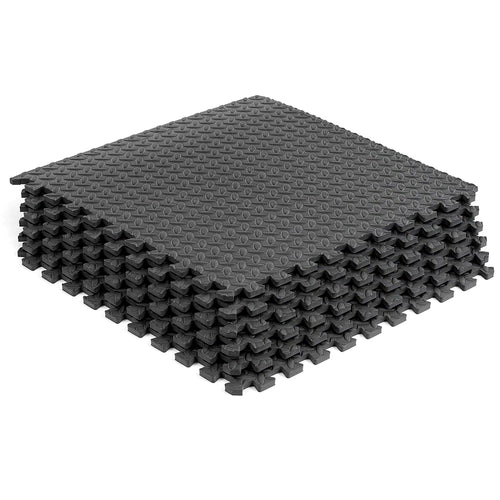
EVA foam and rubber are different materials with different performance characteristics. Do not use an image or the word 'gym' as evidence that a mat is rated for impact from weights. Check the actual product specification.
Measure coverage
Measure the usable floor area and account for doors, corners and equipment feet. Compare the tile's usable dimensions with the pack's stated coverage. Check how edge pieces affect the finished layout.
Look beyond thickness
Thickness alone does not establish a mat's suitability. Density, construction, subfloor condition and the equipment load also matter. For heavy lifting, obtain a suitable flooring specification before buying.
Plan cleaning and inspection
Follow the supplied care instructions. Keep seams flat and check for damage or movement. Do not let a mat conceal a damp, uneven or damaged floor.
Browse our gym flooring collection and check the material, dimensions and pack coverage on the product page. For questions about a particular product, contact Shark Power Gear.
Share